
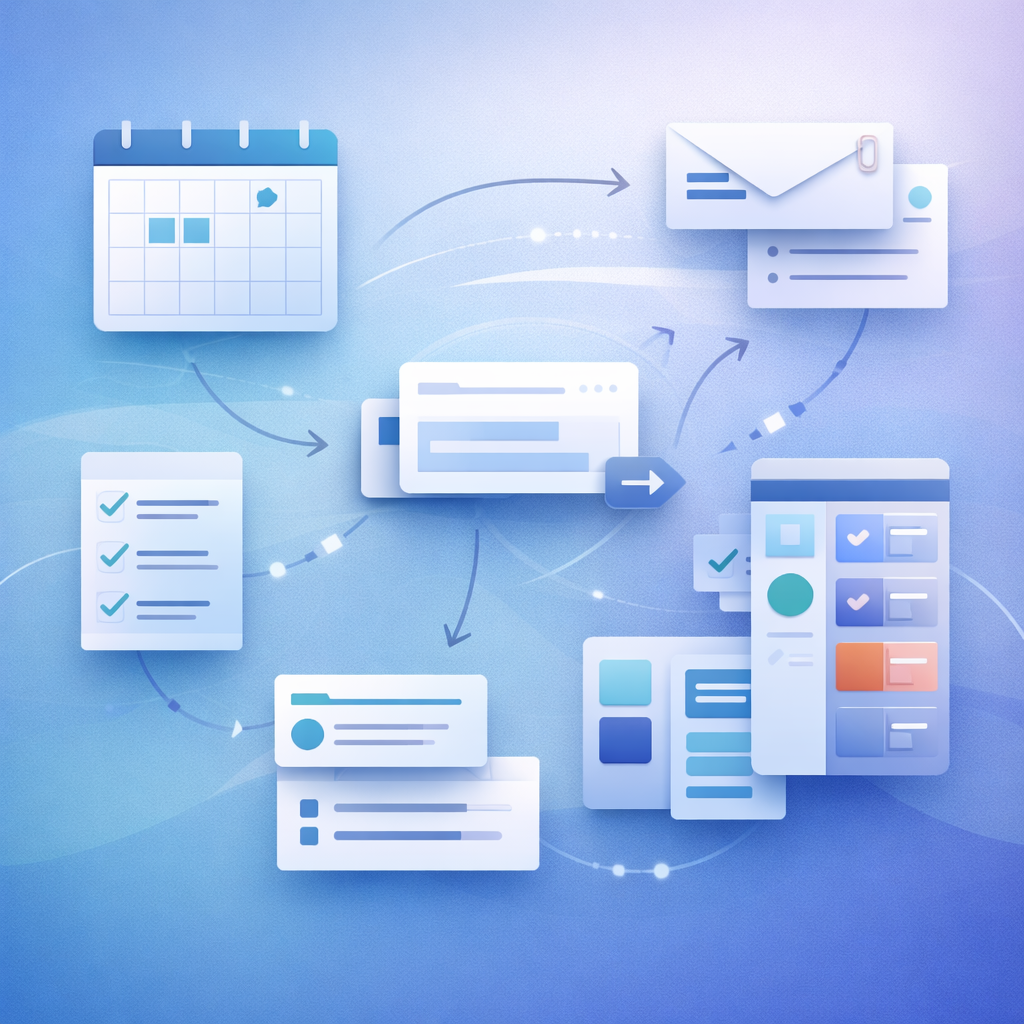
This article assumes one thing: you already understand that communication is a core Product Management skill. We are not here to debate why it matters. We are here to address something far more practical: how daily communication actually drives—or blocks—execution.
Most delivery problems in Product Management are not caused by bad strategy or lack of intelligence. They are caused by weak daily communication patterns: meetings without outcomes, emails without ownership, conversations without follow-up, and decisions that exist only in people’s memories.
This article focuses on repeatable communication patterns that Product Managers can apply every single day to reduce noise, increase clarity, and turn alignment into real progress.
Meetings as a Delivery Mechanism (Not a Ritual)
Product Managers attend a large number of meetings, but not all meetings deserve to exist. The most effective PMs treat meetings as delivery mechanisms, not calendar fillers.
Before a meeting happens, there should be a clear answer to one question: what decision, alignment, or unblock will come out of this? If the answer is vague, the meeting is likely unnecessary or poorly designed.
Operationally, meetings fall into a few useful categories. Decision meetings exist to choose a path forward. Alignment meetings exist to ensure everyone shares the same understanding. Problem-solving meetings exist to explore options and trade-offs. Information-sharing meetings exist to distribute context. Mixing these goals usually leads to frustration.
During meetings, the Product Manager’s responsibility is facilitation, not dominance. This means keeping the discussion anchored to the goal, preventing premature deep dives, and making sure disagreement surfaces early. Silent misalignment is one of the most expensive risks in product work.
However, the most important rule is simple: if a meeting ends without explicit decisions or next steps, it failed.
The Follow-Up System: Where Execution Actually Happens
Follow-up is the single most underrated communication skill in Product Management. Many teams believe they are aligned because they talked. In reality, alignment only exists when actions happen after the conversation.
Every meeting that produces outcomes should result in a short written follow-up. This does not need to be formal documentation. It needs to be clear. A good follow-up answers three questions: what was decided, what is still open, and who owns what next.
Ownership must be explicit. Phrases like “we should look into this” or “let’s consider doing X” are execution killers. They create the illusion of progress while guaranteeing inaction. Replacing them with “Alex will analyze X by Thursday” changes everything.
Follow-up is not micromanagement. It is accountability stewardship. Product Managers who consistently follow up create a culture where commitments are real and decisions matter.
Email as an Execution Tool (Not a Status Dump)
Email is one of the most powerful asynchronous tools available to Product Managers, yet it is frequently misused. The goal of an email is not to inform—it is to enable action without requiring a meeting.
Operationally strong PM emails share a few characteristics. They provide just enough context to understand why the message matters. They clearly state the point. And they make the next step unavoidable.
A practical mental model is this: if the reader scans the email in 30 seconds, will they know exactly what to do? If not, the email is not ready.
Subject lines matter more than most people think. A vague subject like “Update” signals low priority. A specific subject like “Decision needed: API versioning approach” sets expectations immediately.
Tone also matters. Clear and direct communication builds trust. Overly defensive or overly verbose emails signal uncertainty. Product Managers should write with calm confidence, especially when addressing disagreement or risk.
Async vs. Sync: Choosing the Right Medium
One of the most common communication mistakes in modern product teams is using the wrong medium. Not everything needs a meeting, and not everything can be solved asynchronously.
As a general rule, ambiguity requires synchronous communication. If the topic involves trade-offs, disagreement, or uncertainty, a live conversation is usually more efficient. Clarity, on the other hand, scales well asynchronously.
Product Managers should be deliberate in choosing when to schedule meetings and when to rely on written communication. Excessive meetings slow teams down. Excessive async communication creates misinterpretation.
A useful operational question is: is this a clarity problem or a decision problem? Clarity problems can often be solved asynchronously. Decision problems usually require live discussion.
Conference Calls and Remote Alignment
In distributed teams, communication requires additional discipline. Without physical cues, misunderstandings last longer and spread faster.
Product Managers should structure remote calls more tightly than in-person ones. Clear agendas, visible artifacts, and explicit decision checkpoints are essential. Silence should not be interpreted as agreement.
One effective technique is verbal confirmation. Asking participants to restate decisions or next steps ensures shared understanding. This may feel repetitive, but it significantly reduces execution risk.
After remote meetings, written reinforcement is not optional. A short summary locks alignment in place and prevents divergent interpretations.
Informal Communication With Intent
Informal conversations are often where the most valuable information emerges. Concerns, doubts, and early warning signals rarely appear first in formal meetings.
Product Managers should actively cultivate informal communication channels. Quick chats, casual check-ins, and spontaneous conversations create psychological safety and surface insights earlier.
However, informal communication should never replace formal alignment. Insights gathered informally must be translated into explicit decisions, documentation, or follow-ups when they affect delivery.
The operational skill here is translation: turning informal signals into structured action without breaking trust.
Handling Noise, Drift, and Misalignment
Even with strong communication practices, drift happens. Priorities shift, assumptions change, and teams reinterpret decisions over time.
Product Managers must actively monitor for signs of misalignment. Repeated questions about the same topic, conflicting implementations, or inconsistent messaging are all indicators that communication needs reinforcement.
When drift is detected, the solution is rarely more explanation. It is usually clearer framing. Restating goals, constraints, and success criteria often realigns teams faster than adding detail.
A Simple Daily Communication Checklist for PMs
At the end of each day, strong Product Managers subconsciously—or explicitly—check a few things:
Did today’s meetings produce clear outcomes?
Were decisions documented and shared?
Do owners know what they are responsible for next?
Is there any ambiguity that needs clarification tomorrow?
Did I choose the right medium for each message?
This habit creates compounding returns over time.
Closing Thoughts
Daily communication is not glamorous, but it is decisive. Strategy sets direction, but daily communication determines speed, quality, and reliability of execution.
Product Managers who master operational communication reduce friction, prevent rework, and create momentum. They turn conversations into commitments and alignment into action.
In the next article, we will focus on one of the most critical—and often misunderstood—relationships in Product Management: how to communicate effectively with engineers, balancing clarity, collaboration, and long-term technical health.
You may also like: Working with Engineers: How Product Managers Communicate for Clarity, Trust, and Technical Health
Reach a global audience of portfolio, program, and project managers, product leaders, and certification professionals. Explore advertising opportunities .
Sponsored